 Родовід Архів
Your family in 18th–20th century parish registers
A surname and the name of a town, village or district is enough. Every person in the tree is backed by a page scan with an archive reference.
First step: the €19 search, a written report on where your family’s books are.
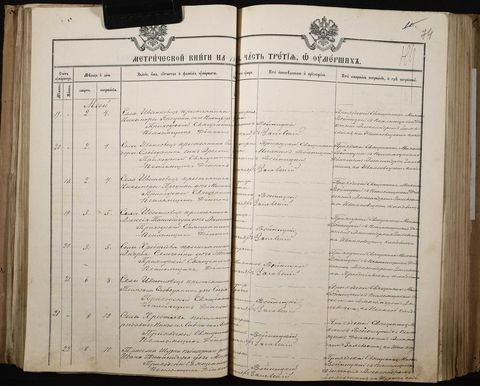
Under every fact there is an archive reference, and where the entry exists in the parish register, a crop of it. This one is a death entry, Podillia, 1898.
«ДАХмО ф. 18 оп. 2 спр. 38, зобр. 75»
Inside the tree there is also a timeline, a family circle, a resettlement map, reading progress and a work-plan tab: who we are searching for now. You see your tree from day one; we add a new person as soon as a record is checked.

Proof
From a name in the tree to the archive frame: four steps
An example from the 1891 case: Joannes Pełypiw, born 1859 in Небилів (Nebyliv). TsDIAL (Central State Historical Archive of Ukraine in Lviv), fond 201, opys 4a, sprava 4066, frame 5355.
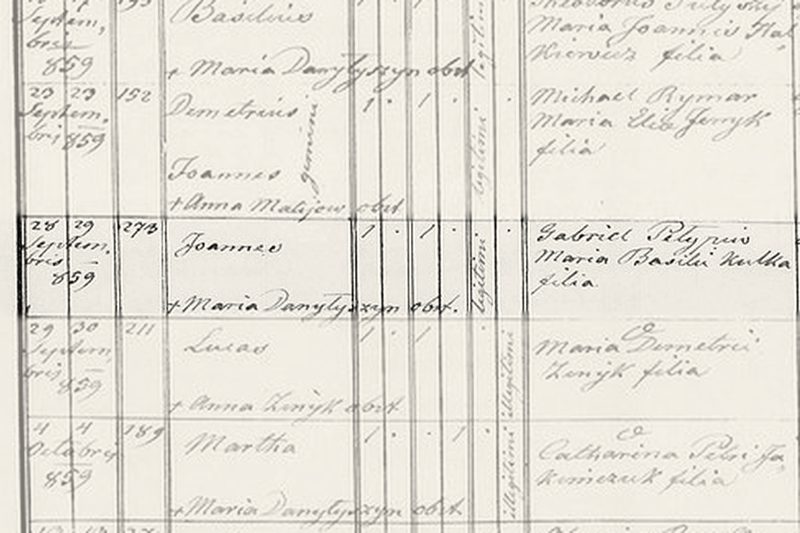
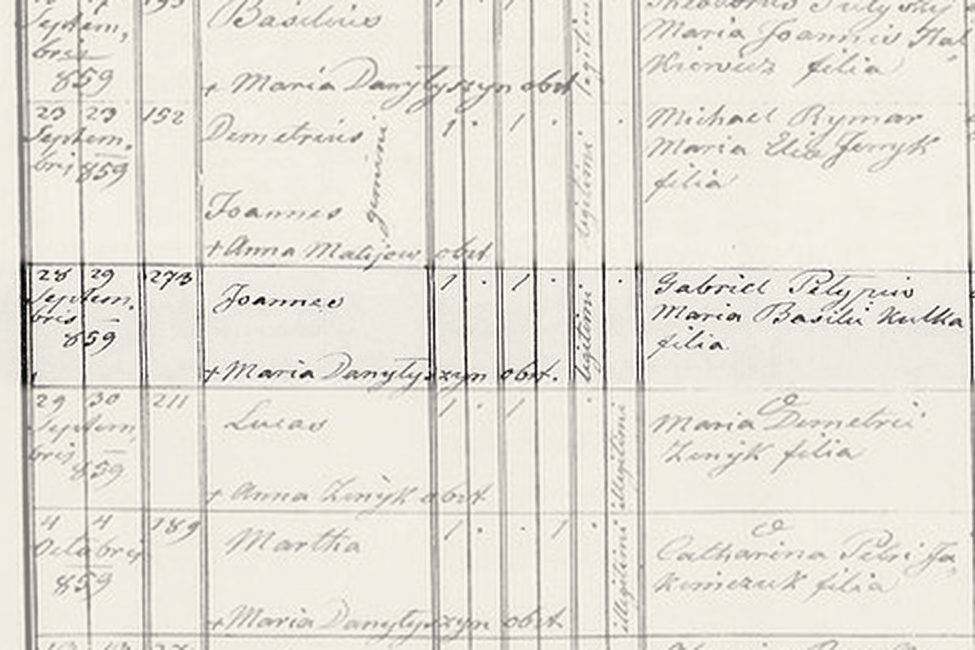
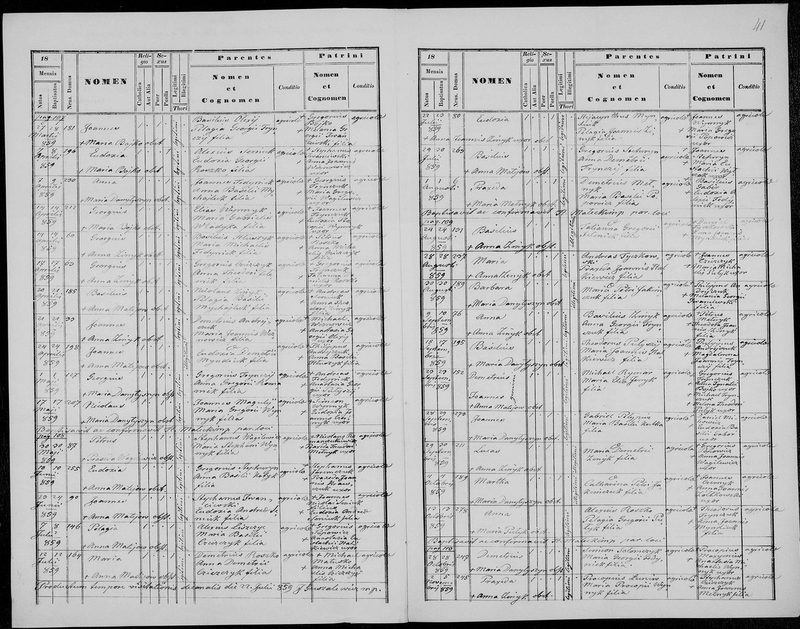
«ф. 201, оп. 4а»
«спр. 4066»
«Зображення 5355» How to open the file yourself ↗
How it starts
The €19 search: you write a few words, we send back a verdict
Every detail you know saves days, sometimes weeks, of searching: a name, a surname, a town or village, a year. So the first step is to write down what you know, for example, “grandfather Melnyk, from Іванківці (Ivankivtsi) near Нова Ушиця (Nova Ushytsia), sometime in the 1880s.” You do not need the exact name of the place. Then the search begins.
The search ends with a written report and a verdict on whether it is worth searching further. The verdict is yes when three things are confirmed:
- we know which parish your family belonged to;
- the parish registers of that parish survive for the years you need;
- those books are scanned and available online.
Then the report names the books and years we will read, and which tier fits you. If the books exist only in the archive and are not scanned, the report says where, and we offer a paid copy order. We promise no names and no number of ancestors before the books are read.
Full sample report →We confirm with you which village: the DAKhmO (State Archive of Khmelnytskyi Oblast) catalog alone lists five villages named Іванківці.
Іванківці Хребтіївські.
«ДАХмО ф. 18 оп. 2 спр. 35–38» ·
1876–1902, online
«ДАХмО ф. 18 оп. 1 спр. 494–499» ·
1795–1857, not digitized, archive only
«ЦДІАК ф. 224 оп. 1 спр. 425» · 1761–1768
Files 1876–1902. Older books lie in the archive only. There is no name index.
Files 35–38, 1876–1902: they are online.
An index already exists
An index is an alphabetical list of names in a book, like the index at the back, not a ready-made tree. It helps us find entries faster: we check each against the book’s page and read on into the years it does not cover.
€19 counts toward Family or HeritageThe books exist, no index
The report names the files, and we read them page by page.
€19 counts toward Family or HeritageNo scans available
If the parish books survive, we offer a paid copy order from the archive instead of reading them. The €19 comes back only if the catalog shows no book of that parish for 1850–1917.
€19 comes back if no books existHow it all happens
- TodayPayment
By card, through Stripe, no sign-up.
- Same dayQuestionnaire
A few questions by email. One paragraph is enough to answer.
- After the questionnaireReport
An email with the files, years and links.
- 4–6 weeks*Searching the books
A separate order, Family or Heritage, if the search showed it is worth it. Family takes 4–6 weeks, and the start date is named before payment.
* If official requests to archives are needed, the term can stretch: the law gives the archive 30 days to answer, and sometimes we wait longer. We pay for the requests: up to two in Family, up to four in Heritage. The search works only with sources already online.
Price
First, the €19 search
If the books exist, the report proposes what to read and names the start date. Family, both your father’s and your mother’s side: €490. The €19 for the search counts toward it, so the balance is €471. The scope of Family, a list of books and parishes and a term of 4–6 weeks, is fixed after the search. Heritage, more depth and side branches: from €990.
The price is fixed: the amount will not change once work has started.
More on prices → Free check before the search →The search
€19≈ ₴970A written report on your family’s books, with a list of archive files and links.
Start the search €19 The report arrives within five days of the questionnaire, if you ask us to start right away. The €19 comes back only if the catalog shows no book of your parish for 1850–1917.Method
Pełypiw instead of Pylypiv: three traps of parish registers
Where a book has no name index, it is read page by page. In old parish registers people are written down differently from how they are searched for today. Each of these traps is visible only once the pages are read straight through.
In Galicia the books were kept in Latin script. Єлиняк in the same book became Jeleniek.
People were baptized with a church name and lived with the home one. In «ДАХмО ф. 18 оп. 2 спр. 38, зобр. 105», «Іоанн» and «Параскевія» are written, and at home that is Ivan and Paraska.
The file’s description does not match what is in it. Anyone searching for marriages by the catalog will not open this file. A full reading of this file.
Coverage
Parishes and books of your region
The catalog holds 30 217 settlements across all oblasts: find your town or village. For 2 101 places the description is already ready: it shows the parish, the books and what of them is digitized.
If your oblast or locality is not in the catalog, write to pytannia@rodovidarchive.com everything you remember: the name the way it was said at home, or in its old spelling, and the surname. We will check it against our list of old names and reply for free on whether the search makes sense.
All oblasts →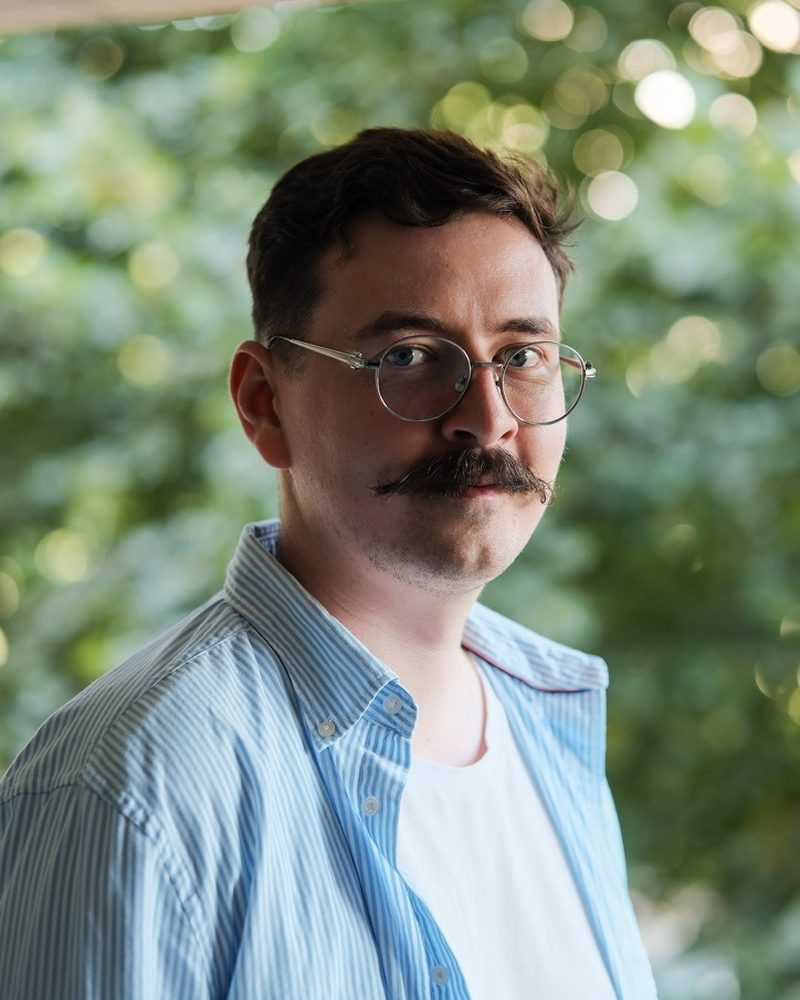
Who does this
Oleksandr Slobodianiuk
Oleksandr started reading parish registers when he was searching for his own family. One file, read straight through, gave fifteen names where free indexes gave none. He checks every entry against the scan and answers letters himself.
Portugal · pytannia@rodovidarchive.com More about the author and data privacy →Questions
Frequently asked questions
What do you need to know to start?
The more you know, the faster the search. But to start, the names of your parents, grandmothers and grandfathers and the place the family came from are enough: a village, a district or a nearby town. Exact dates are not needed. If there are several places with that name, we will confirm with you by email.
What do I get for €19?
A written report on the place your family came from: the parish, the archive, the fond, the inventory, the file and the years, and what of it is online, with links. And a verdict on whether ordering Family or Heritage makes sense.
Can I learn something before paying?
Yes, there is a free check: write the surname and the town or village, and we will reply by email on whether the books of that parish survive for the years you need. Free, with no obligation.
When does the report arrive?
Within five days of the questionnaire, if you ask us to start right away. Without that request, we start after 14 days: that is how long EU law, where our business is registered, gives you to change your mind and get all your money back. The five days are counted from the day you complete the questionnaire: we cannot start the search without your details. How we count the term.
Is it guaranteed that an ancestor will be found?
No. No researcher guarantees that. We guarantee that we will read the agreed books and check every find against the scan. If there is no entry, you get a proven “no” with frame numbers. We refund the money if the catalog shows no book of the parish for 1850–1917 (the €19 search fee), or if the reading stops earlier: then we refund the part not read.
All questions
Why can’t I order Family or Heritage right away?
First the search finds out whether the parish books survive and whether scans of them exist. Without that, paying for a search in the books is premature.
I only know the oblast. Can I start with that?
Yes, but archive books are described by parish. Write in the questionnaire everything the family remembers: the district, a nearby town, the name of the church. If the place cannot be established, we will say so in the report and name which family documents could help.
When does the €19 come back?
We refund the €19 only when the catalog shows no book of your parish for 1850–1917. If the books survive but are not scanned, that is not grounds for a refund: we offer a paid copy order from the archive, and the €19 counts toward its price. The list of checked sources stays with you. If we proposed Family or Heritage and you did not order it, the €19 is not refunded: it paid for the report.
How much will the work cost after the search?
Family, both your father’s and your mother’s side, costs €490, €471 after the search. The scope is fixed after the search: a named list of books and parishes, 4–6 weeks. The goal of the research: to trace the history of your family back to the early 19th century. How far the sources allow, we estimate during the search. Heritage from €990: an agreed extra depth, side branches and a separate stage after delivery.
What do I get after the search in the books?
A private family website with a password, open to your family, the same as the example at the top of the page: a family tree, a timeline, person cards, stories built from the facts, and family photos. Next to every fact, a crop of the document, the full frame, the archive reference, a readable transcription and a mark: fact, family testimony or version. The link never expires, and you also get a copy that opens in a browser without the internet, and a GEDCOM file. In Ukrainian and English.
Will I be able to keep the tree myself?
Yes. The tree is saved as one file. It opens in a browser without the internet and without us.
How can I check that a fact was read correctly?
Every fact links to a frame and an archive reference. A disputed spelling is marked; an illegible field stays empty.
Do you use artificial intelligence?
Yes, for a first-pass reading of the frames. But before reading, we must find what to read: the parish, the archive, the fond, the file and the years, which means matching old place names against inventories and catalogs from several archives. No AI does that work by itself, and an ordinary chatbot has no access to archive scans and can invent a name where it could not make out the handwriting. When a book is not online, we write official requests to archives, including the SBU archive, and pay for them ourselves. A fact enters the tree only after Oleksandr has checked it against the scan, and where possible, against a second document too: a confessional list or a revision list.
What happens to my data?
We keep only what you write in the questionnaire (the list). The tree is encrypted, and there are no living people in it. There are no ads on the site, and the visit counter keeps no data about you: counts only, no cookies and no data that identifies you. One email is enough to delete everything.
Why won’t I find this myself?
Because most of the work is invisible to a search engine. First the parish has to be established: places were renamed, and one archive inventory can hold five villages with the same name. Then the file has to be found: a search for Барсуки in the DAKhmO catalog gives 0 files, because the archive writes Борсуківці. Then the cursive script has to be read straight through, because an index, where one exists, covers only part of the entries and with errors: Кодрат written instead of Кондрат in the index meant an ancestor’s second marriage was not found in five searches in a row. Women are often recorded without a surname. And when a book is not online, we write official requests to archives, including the SBU archive, and wait up to 30 days for an answer.
Can I cancel the order after paying?
Yes, within 14 days under EU law. As long as we have not started work, we refund everything. If you asked to start earlier, you pay only for the part already done, and once the search report has been sent, the €19 is not refunded: the work is done. Full terms are on the Rights page.
I already have a tree in a GEDCOM file. Does that matter?
Yes. Attach the file to the questionnaire, and we will continue from where the tree stopped, instead of starting from scratch.